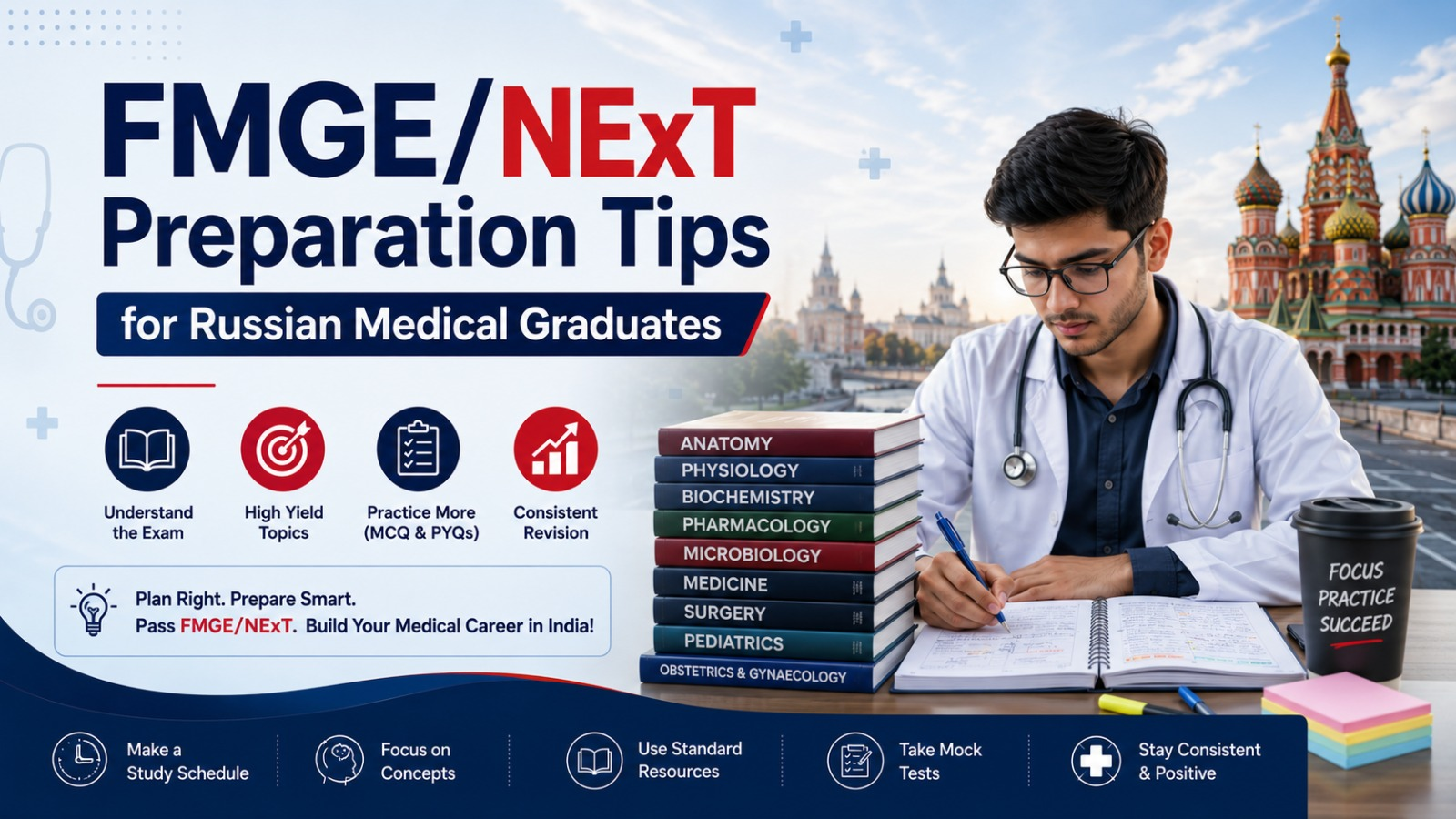
Completing MBBS education in Russia is the first step towards becoming a doctor. Indian graduates must also meet the latest licensing requirements issued by the National Medical Commission (NMC) before practising in India. Many students choose Russia because several universities are recognised by the NMC and listed in the World Directory of Medical Schools (WDOMS), while also offering affordable medical education.
Success after earning an MBBS degree in Russia depends on structured preparation, regular revision, and using official resources from authorities such as the NMC and National Board of Examinations in Medical Sciences (NBEMS). This guide shares practical FMGE/NExT preparation tips to help you plan your studies and improve your exam readiness.
Why FMGE/NExT Preparation Matters for Russian Medical Graduates
Students completing MBBS education in Russia must understand the licensing pathway before planning their medical careers in India. The National Medical Commission (NMC) regulates the requirements for medical registration. Students should always follow the latest official NMC notifications, as examination and licensing regulations may change over time.
A well-planned FMGE preparation strategy helps students build strong medical concepts and improve exam readiness. Early preparation allows more time for revision, mock tests, and identifying weak subjects. Qualifying the applicable licensing examination is an important step towards pursuing postgraduate education or practising medicine in India, subject to the current regulatory requirements.
Step-by-Step FMGE Preparation Strategy
A structured FMGE preparation strategy helps students complete the syllabus in an organised way. It improves consistency, reduces last-minute pressure, and provides enough time for revision, mock tests, and strengthening weaker subjects before the examination.
Understand the Exam Pattern
Begin with the official syllabus and exam pattern published by the National Board of Examinations in Medical Sciences (NBEMS). Understand the computer-based format, qualifying requirements, and question style. Solve previous-year questions to become familiar with the examination.
Build a Study Schedule
Prepare a realistic study plan with daily learning goals and weekly revision sessions. Allocate time for every subject and monitor your progress regularly. Good time management helps maintain consistency throughout your preparation.
Focus on Clinical Subjects
Pay extra attention to Medicine, Surgery, Obstetrics & Gynaecology, and Paediatrics. Build strong clinical concepts instead of memorising facts. Understanding practical applications improves problem-solving skills during the examination after completing your MBBS degree in Russia.
Practise MCQs Regularly
Attempt MCQs and full-length mock tests regularly. Review your mistakes after every test and revise weak topics. Regular practice improves speed, accuracy, confidence, and overall exam performance.
Common Challenges During FMGE/NExT Preparation
Students completing MBBS study in Russia often face different challenges while preparing for licensing examinations. According to guidance from the National Medical Commission (NMC) and NBEMS, a structured FMGE preparation strategy and consistent revision can help overcome these common difficulties.
- Managing the vast MBBS syllabus within a limited preparation period.
- Solving clinical and application-based questions effectively.
- Adapting to differences in medical terminology and language.
- Managing study time alongside internships or other responsibilities.
- Planning regular revision without skipping important subjects.
- Handling exam stress while maintaining focus and motivation.
- Avoiding gaps in study routine by staying consistent every day.
How Chechen State University Supports Medical Learning
Chechen State University is a government university that offers MBBS in Russia for international students. The chechen state university provides English-medium MBBS programmes, experienced faculty, modern laboratories, and well-equipped academic facilities. These resources help students build strong theoretical knowledge throughout their medical education.
Students also gain clinical exposure through affiliated hospitals, allowing them to connect classroom learning with practical training. The university offers academic and student support services to help international students adapt to campus life. Its structured learning environment encourages continuous skill development and professional growth without making any guarantees about licensing exam outcomes.
Best Practices to Improve Your FMGE/NExT Performance
Students with an MBBS degree in Russia can improve their exam readiness through consistent study and disciplined revision. A structured FMGE preparation strategy helps build confidence and strengthens long-term understanding of medical concepts.
- Start your preparation early to avoid last-minute pressure.
- Follow the official syllabus and study from standard medical textbooks.
- Revise every subject regularly to improve retention.
- Attempt mock tests to evaluate your preparation level.
- Analyse mistakes after each test and focus on weak topics.
- Prepare short revision notes for quick review before the exam.
- Maintain good physical and mental health through proper sleep, nutrition, and regular breaks.
Conclusion
Success after MBBS education in Russia depends on consistent preparation and a clear study plan. Focus on building strong concepts, revising regularly, and practising mock tests to improve your performance. Always stay updated with the latest notifications issued by the National Medical Commission (NMC) and National Board of Examinations in Medical Sciences (NBEMS).
While planning MBBS in Russia, choose a recognised university with strong academic support. EOCL (Education Orbit Counselling & Link) can help you select the right university, understand licensing pathways, preparation tips, and guide you to begin medical practice.